
What are sand fleas?
A sand flea is a mole crab, also called a sand crab. It is not a flea. These small, oval crabs have no claws and cannot bite or pinch, according to UF/IFAS. The New Jersey crab guide also describes them as harmless.
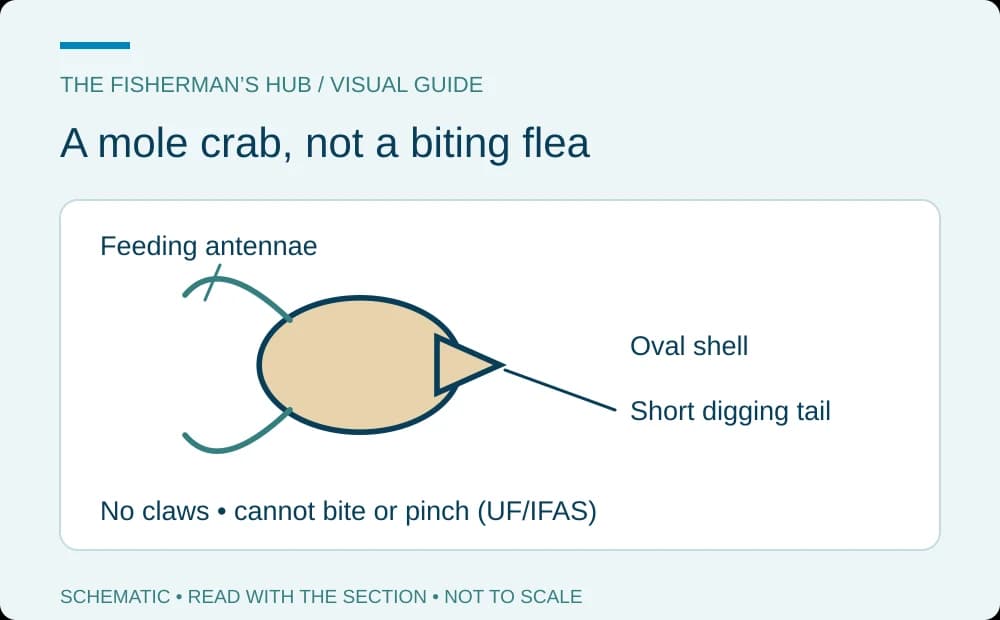
Their short tail helps them dig backward into wet sand. UF/IFAS calls this digging part the telson. They also swim backward. Their antennae filter tiny food particles from the water; FWC lists plankton and detritus, or bits of dead material, as food.
Size depends on the source. FWC says up to 2 inches. UF/IFAS describes crabs about ½–1 inch long. Florida Sportsman says females can reach 1½–2 inches, while males rarely exceed ¾ inch. Do not expect every flea you uncover to be the same size.
The scientific names differ too. FWC, Coastal Angler and New Jersey name Emerita talpoida. UF/IFAS names Emerita portoricensis in its Florida Gulf Coast account. Keep those names with their source and coast rather than treating them as one species everywhere.
Florida Sportsman lists pompano, whiting, black drum, croakers, permit and sheepshead among fish that eat them. UF/IFAS also lists redfish. For the outfit around your bait, use the beginner surf-fishing setup guide.
Where and when to look for sand fleas
Start in the swash zone: the strip of wet beach between where waves break and the highest point they wash up. The wash is the water running over that sand. Mole crabs move up and down the beach as the tide changes, according to the New Jersey guide.
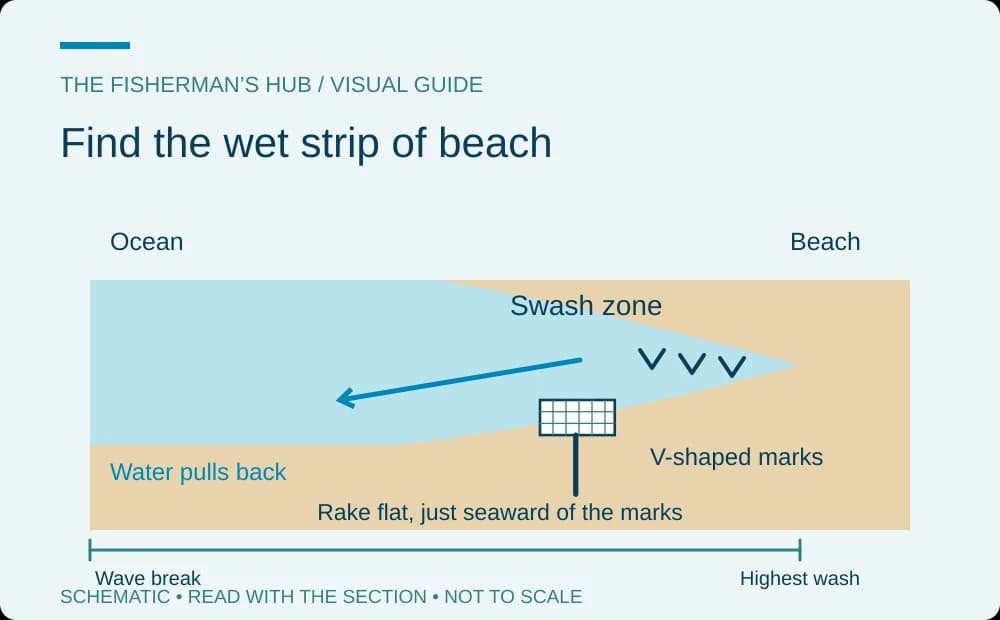
Look as the water drains away. Florida Sportsman describes single V-shaped marks or rough, rippled patches. The V can come from a feeding antenna sticking out of the sand. Coastal Angler also points readers to V-shaped patterns at the water’s edge.
Mike Conner’s Florida Sportsman account gives timing clues from Southeast Florida. He favors September through November and a high, falling tide: water near its high level that has started to drop. He says it depends on the beach. His account also says cold weather sends fleas deeper into the sand. These are local observations, not a season or tide rule for every coast.
Keep watching the waves while you search. Use how to read a beach for surf fishing for the wider beach-reading and surf-safety lesson.
How to catch sand fleas with a rake or by hand
A sand flea rake scoops sand and lets water sift it out. UF/IFAS describes it as a mix of rake, shovel and sieve. Coastal Angler says it can be made from wire mesh or found at bait shops. Here it is a type of tool, not a product recommendation.
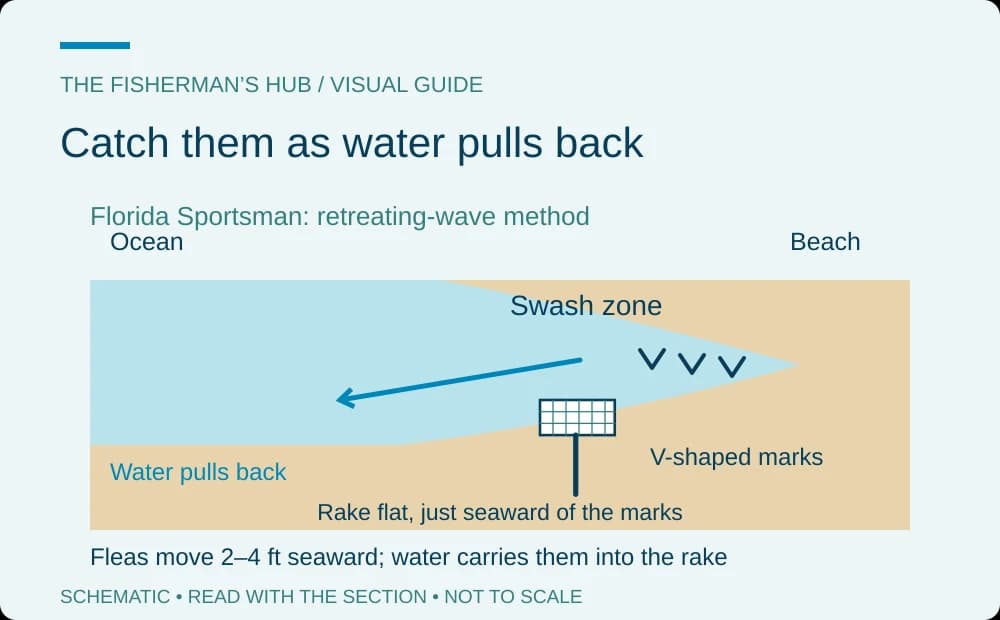
The sources describe different wave timing. Conner lets a retreating wave carry fleas into a flat rake. UF/IFAS pulls the rake through sand while waves come in. Follow one description rather than mixing the two into a single step.
- Source: UF/IFAS — sand fleas
- Source: Florida Sportsman — finding, catching and saving sand fleas
- Source: Coastal Angler — Hook a Flea for Florida Pompano
- Source: NJ Fish & Wildlife — crab guide (PDF)
Read the marks and approach quietly
Find the V marks or rippled patch first. Conner approaches quietly from higher on the beach instead of walking straight through the colony. He reports that smaller marks mean smaller fleas.
Set the rake as the wave pulls back
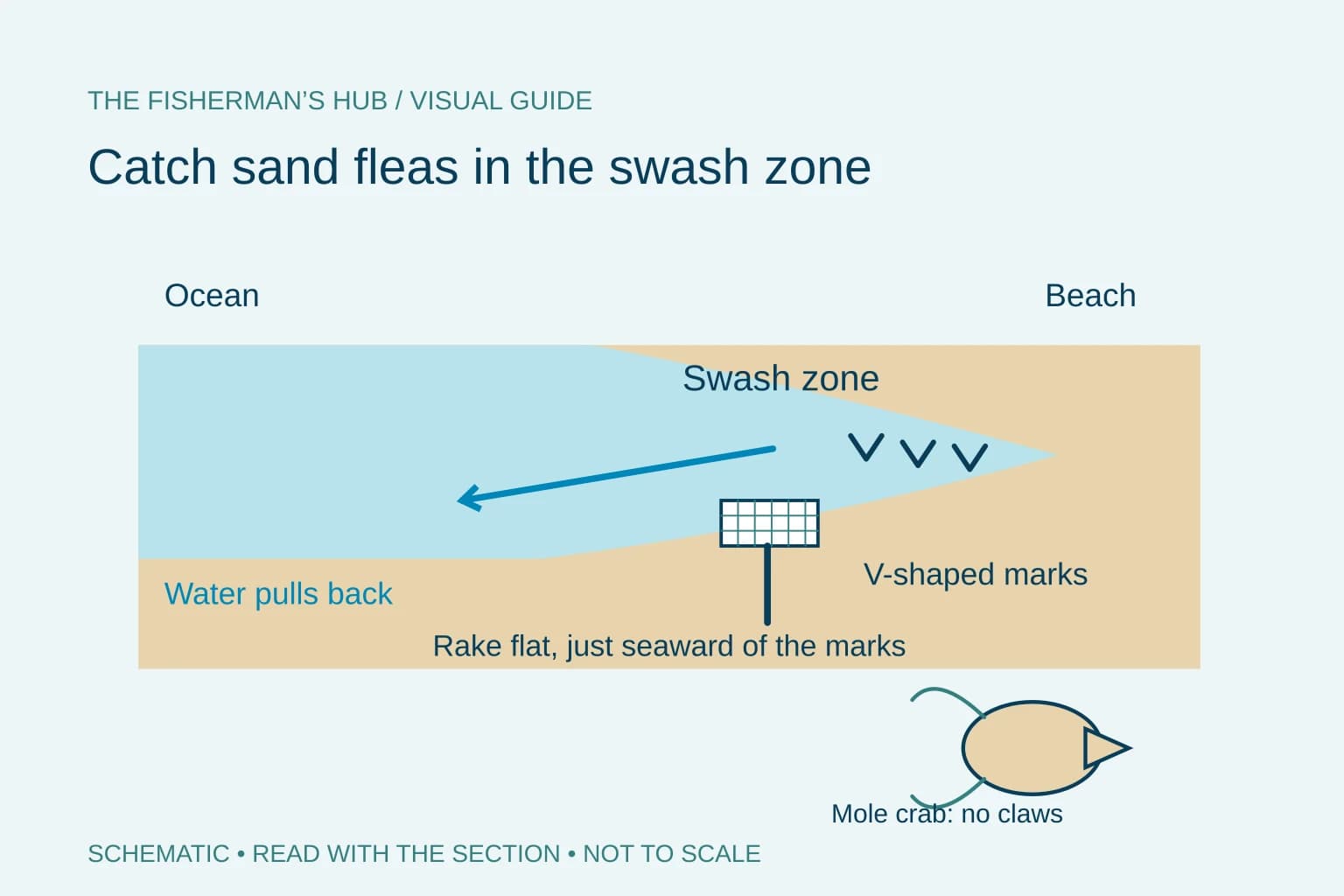
In Conner’s method, wait for a wave to wash over the spot and start to recede. Lay the rake flat on the sand just seaward of the marks, toward the ocean. He says fleas shoot out and bury themselves again 2–4 feet seaward. Let the draining water carry them into the rake; his method uses little digging.
UF/IFAS gives another method: drag the rake through sand in the swash zone as waves roll in. Lift it, then dip it in water to rinse the sand through the mesh. The fleas stay in the rake.
Catch them by hand
You can use your hands instead of a rake, according to Coastal Angler. Look for the same V-shaped signs. Dig in the swash zone, keeping an eye on incoming waves; the New Jersey guide describes digging mole crabs out of this wet strip of beach.
Keep sand fleas wet and cool
Keep live fleas wet and cool, but do not fill their bucket with water. Conner warns against letting them soak in their own urine. His method uses a mesh bag, dipped through the water now and then, and kept in the shade of a fish cooler or inside the cooler.
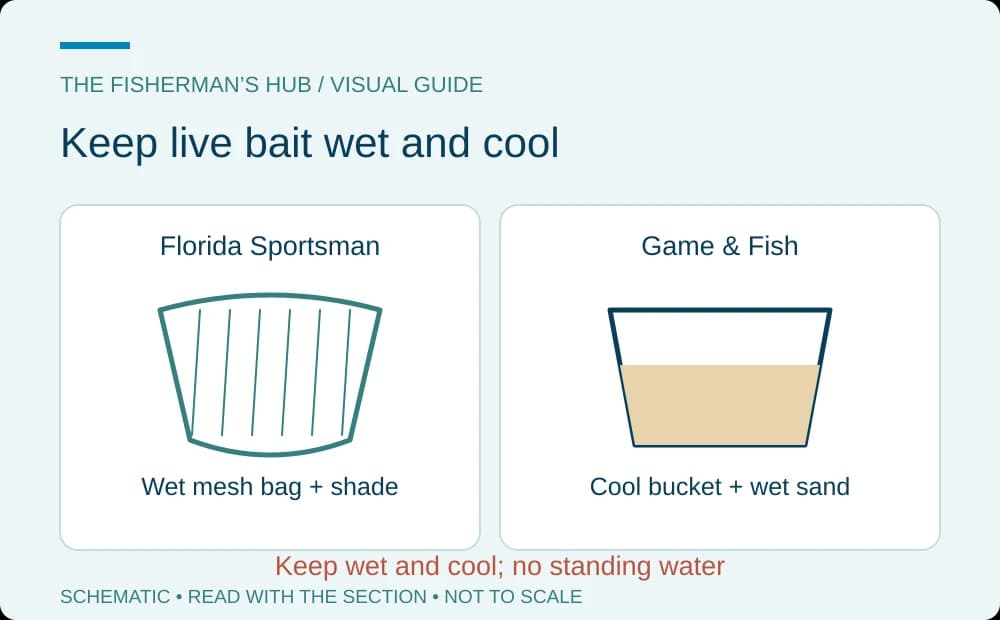
Game & Fish describes another holding method: wet sand in a bucket. Its author says fleas can stay alive for hours if kept cool. In hot weather, he sets the bucket on a bag of ice. These are two source methods for holding live bait, not instructions to leave it in standing water.
Live and store-bought fleas may handle differently. Florida Sportsman says shop fleas are normally blanched and frozen. Blanched means briefly put into boiling water before cooling. Conner says live fleas hold the hook better. Poor blanching can leave them brittle or rancid, with black edges. His freezing method is below.
How to hook a sand flea for your rig
Choose the hooking route by the rig and the source you are following. Game & Fish and Salt Strong call it the digger; it appears to be the part UF/IFAS calls the telson. Game & Fish passes the hook through it from below. Salt Strong shows a side-of-head route for a raised bait and a different digger route for bait on the bottom. Thaw a frozen flea before inserting the hook, as Florida Sportsman advises.
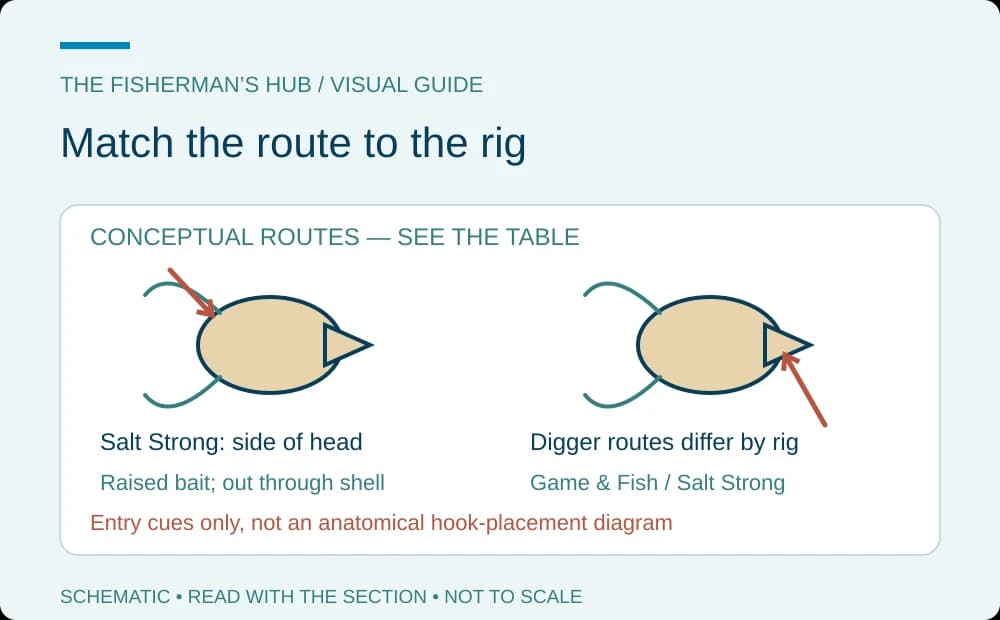
A dropper is a short side branch of line that holds a hook. A pompano rig is a bait rig used for pompano; the Game & Fish example has small floats on 12-inch droppers. A Carolina-style rig presents bait on the bottom in Salt Strong’s lesson. Keep those setups separate when choosing a row below.
Hook sizes here are source examples. Game & Fish uses 1/0–2/0 octopus-type hooks with a short shank, the straight part below the eye. Salt Strong says most anglers use 1/0 or 2/0. Coastal Angler’s author prefers a 2/0 circle hook. Check current local hook rules before using an example.
Coastal Angler describes an East Coast layout with two dropper loops and a sinker below them. For the separate tying lesson, follow how to tie a high-low rig. This bait guide does not replace the rig-building steps.
Game & Fish gives a 2–4 oz pyramid sinker example; Coastal Angler gives 1–4 oz. Those are examples from their setups. Use the surf-fishing sinker-weight guide for the weight and rod-load checks.
| Source | Rig | How the hook goes in | Note |
|---|---|---|---|
| Game & Fish | Pompano rig; floats on 12-inch droppers | Through the digger from underneath, then out the back of the shell. | Turn the point to work it through. Avoid cracking the shell to keep the bait alive. |
| Salt Strong — raised bait | Pompano or hook-drop rig off the bottom | Through the side of the head, then out through the shell. | Do not pierce the middle of the bait. |
| Salt Strong — bottom bait | Carolina or similar bottom rig | Open the digger. Insert the point at its base until it comes out the other side. | The guide says this stops digging and exposes eggs. |
| Salt Strong — large fleas | Its hooking lesson above | Hook the flea as described, then cut it in half with scissors. | An option for larger fleas in that lesson. |
Freeze sand fleas for a later trip
The following is Mike Conner’s method in Florida Sportsman. It includes rinsing before blanching, then cooling and draining before freezing. Keep the steps together; his account warns that bagging fleas too soon lets urine spoil the bait.
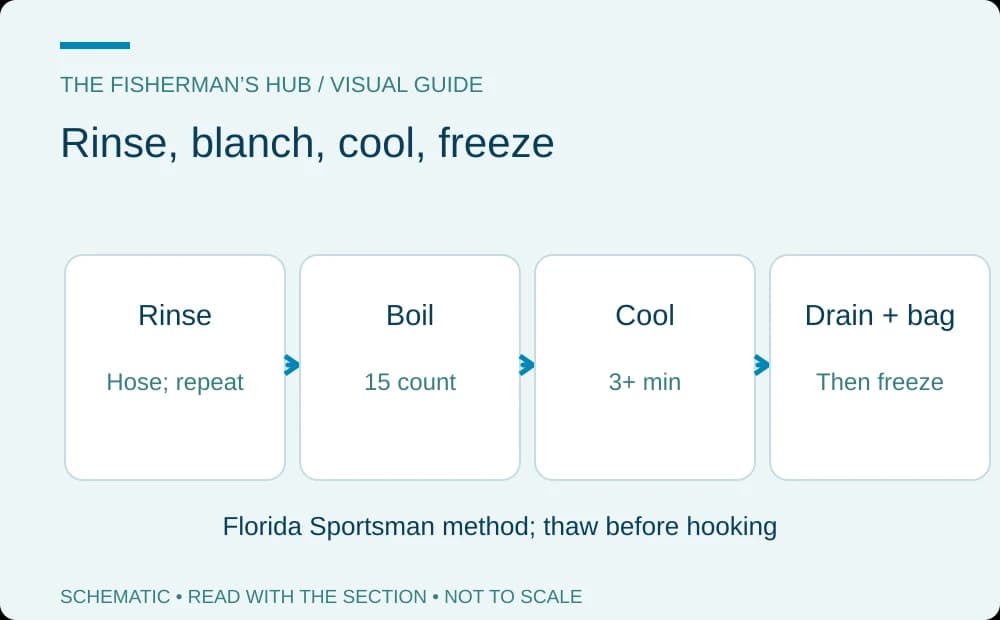
Rinse the fleas well with a garden hose in a small-mesh bag. Repeat about half a dozen times over 1–2 hours so they can release urine before you bag them.
Boiling water and steam can burn; have an adult handle the pot, work outside as Conner does, and keep kids and pets away. Lower the mesh bag into boiling water and count to 15. Remove it and immediately run hose water over the fleas for at least 3 minutes to cool them.
Let the water drain completely. Put the fleas into freezer bags. Conner also uses a vacuum sealer and says his frozen bait remains usable for months.
At the beach, he puts frozen fleas back into a mesh bag and swishes it in the water to help them thaw. Let them thaw before pushing a hook through them.
Check rules and fix common bait problems
The FWC mole crab profile lists Florida recreational regulations as “Unregulated,” checked against the supplied source on October 25, 2026. That statement belongs to Florida’s species profile. Elsewhere, check your state’s current rules before collecting bait. Check local hook rules before fishing too.
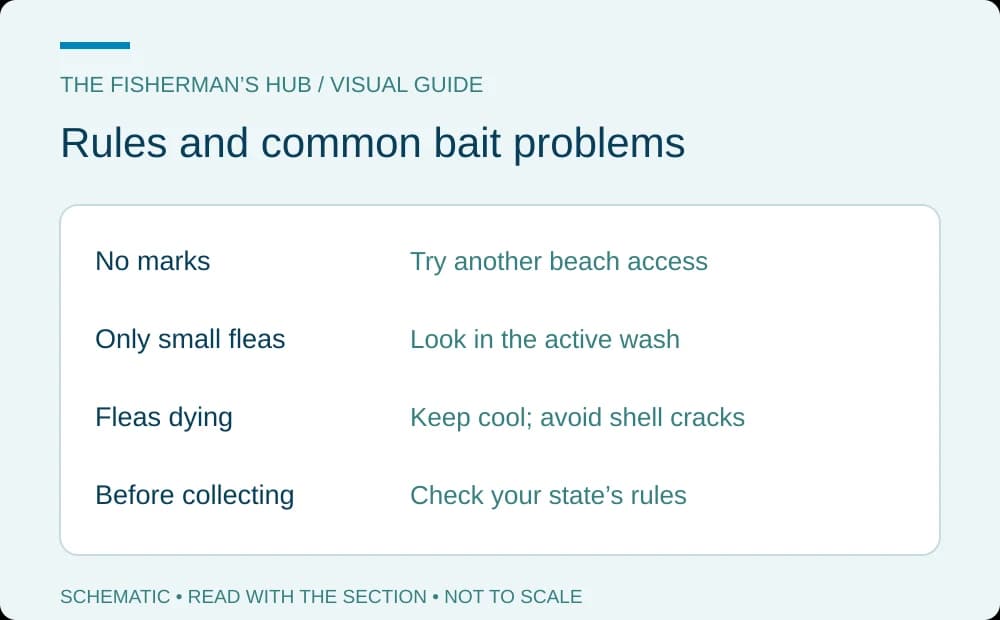
- No V marks: try another part of the wash or another beach access. Conner moves to a different access when he does not see fleas.
- Only tiny fleas: Conner finds small fleas higher on the beach and larger ones in more active wash. Search the active wash rather than staying at the small marks.
- Fleas die or smell: do not let them sit in standing water or their own urine. Use Conner’s wet mesh-bag method or the cool, wet-sand method in Game & Fish. Game & Fish also says to avoid cracking the shell while hooking to keep the bait alive.
- Bait falls off: live fleas hold better than blanched ones in Conner’s account.
- No fleas to catch: Coastal Angler lists small, fresh pieces of shrimp or clam as alternative bait.