
Check your exact rod’s casting rating
Find the lure or casting-weight range printed on the blank, or look up the exact model code with the manufacturer. Rod length and a label such as ‘medium heavy’ are not enough. Two rods of the same length can have very different casting ranges.
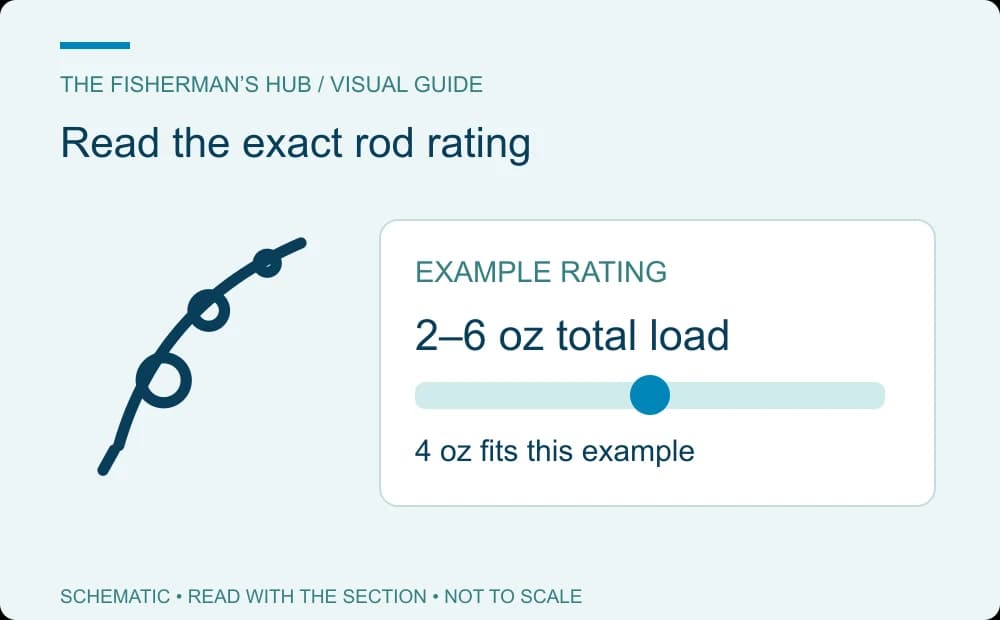
For bait fishing, account for the sinker, wet bait, and rig hardware together. Treat the top of the stated range as a limit, not a challenge. If the manufacturer gives more specific bait-casting guidance for your model, follow that guidance.
The Okuma Rockaway range, for example, contains multiple lengths and actions. A family name in a store listing does not identify which rating applies to the rod in your hand. Our surf rod comparison lists exact model specifications to help compare casting ranges when your current rod does not fit the intended load.
Add the sinker, wet bait, and rig hardware
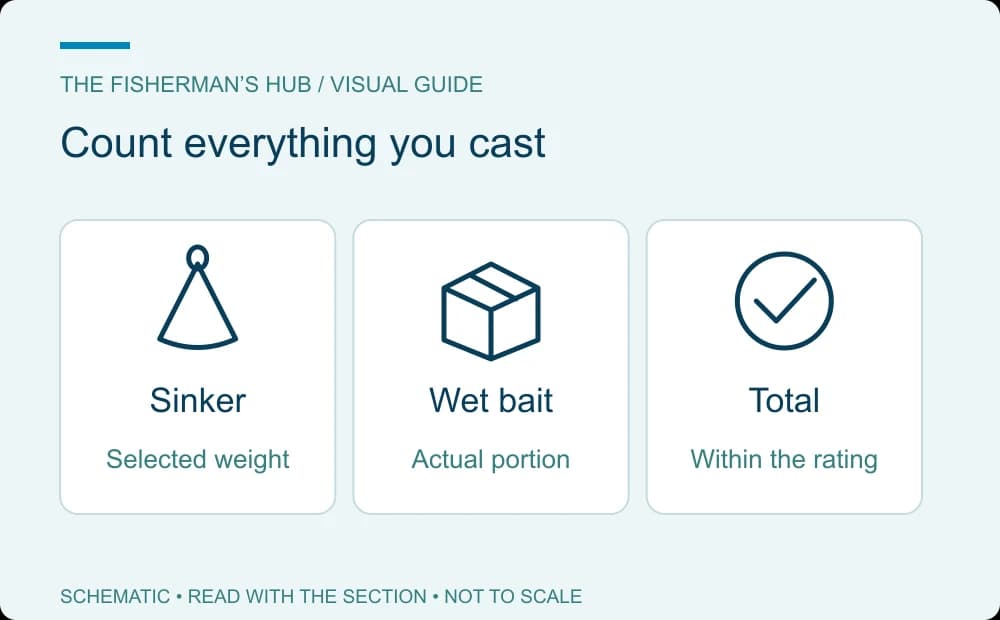
Suppose your rod is rated for a total casting load of 2–6 oz. You weigh a 3 oz sinker, 0.75 oz of wet bait, and 0.25 oz of hooks, swivel, and other rig components. Together they weigh 4 oz. That is inside the example rod’s stated range.
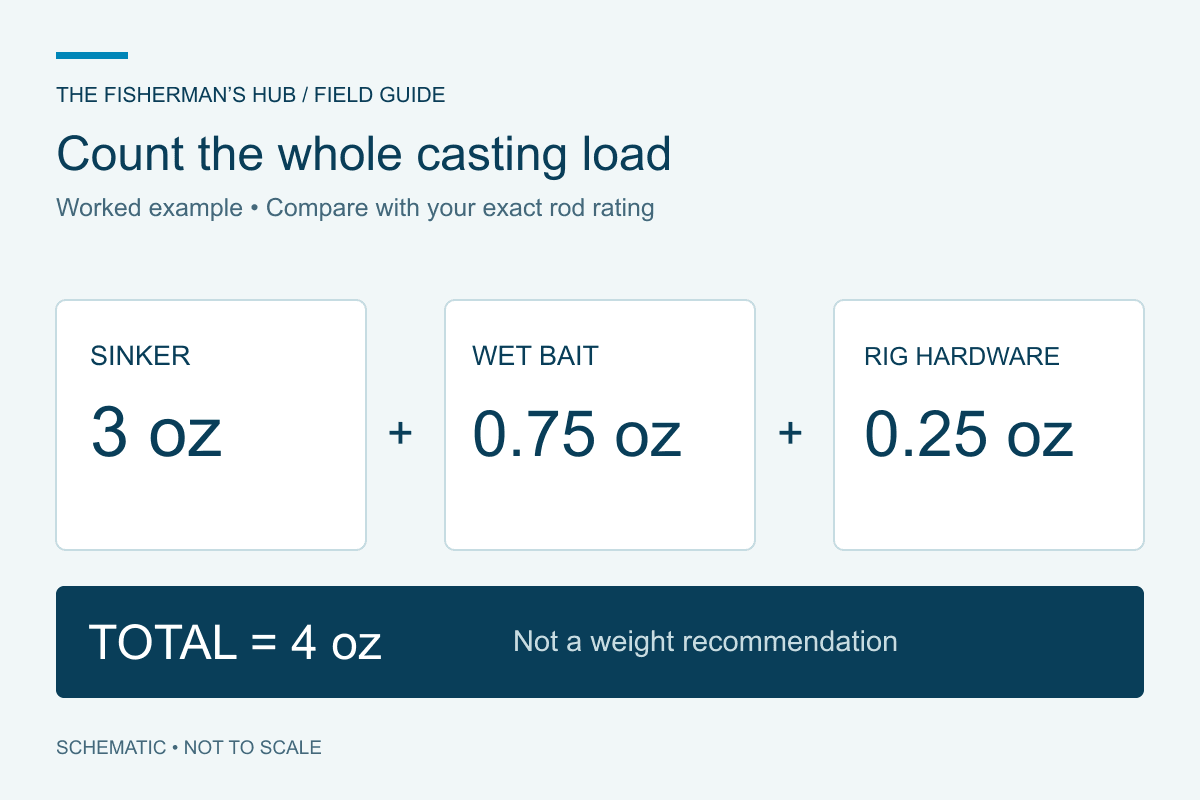
Now replace only the sinker with a 6 oz model. The total becomes 7 oz, which is outside that range. The label on the sinker did not change the limit on the rod. These are illustrative numbers, not a recommendation to cast 4 oz on any surf rod.
A small scale is useful when your bait size changes substantially. Use the actual prepared bait you intend to cast, rather than assuming a whole baitfish weighs the same as a small strip. When matching the rest of the outfit, use the surf-fishing setup builder as a planning aid, then verify the exact rod rating and complete casting load yourself.
| Component | First rig | Heavier sinker |
|---|---|---|
| Sinker | 3 oz | 6 oz |
| Wet bait + hardware | 1 oz | 1 oz |
| Total cast | 4 oz: within the example range | 7 oz: above the example range |
Choose sinker shape for the presentation
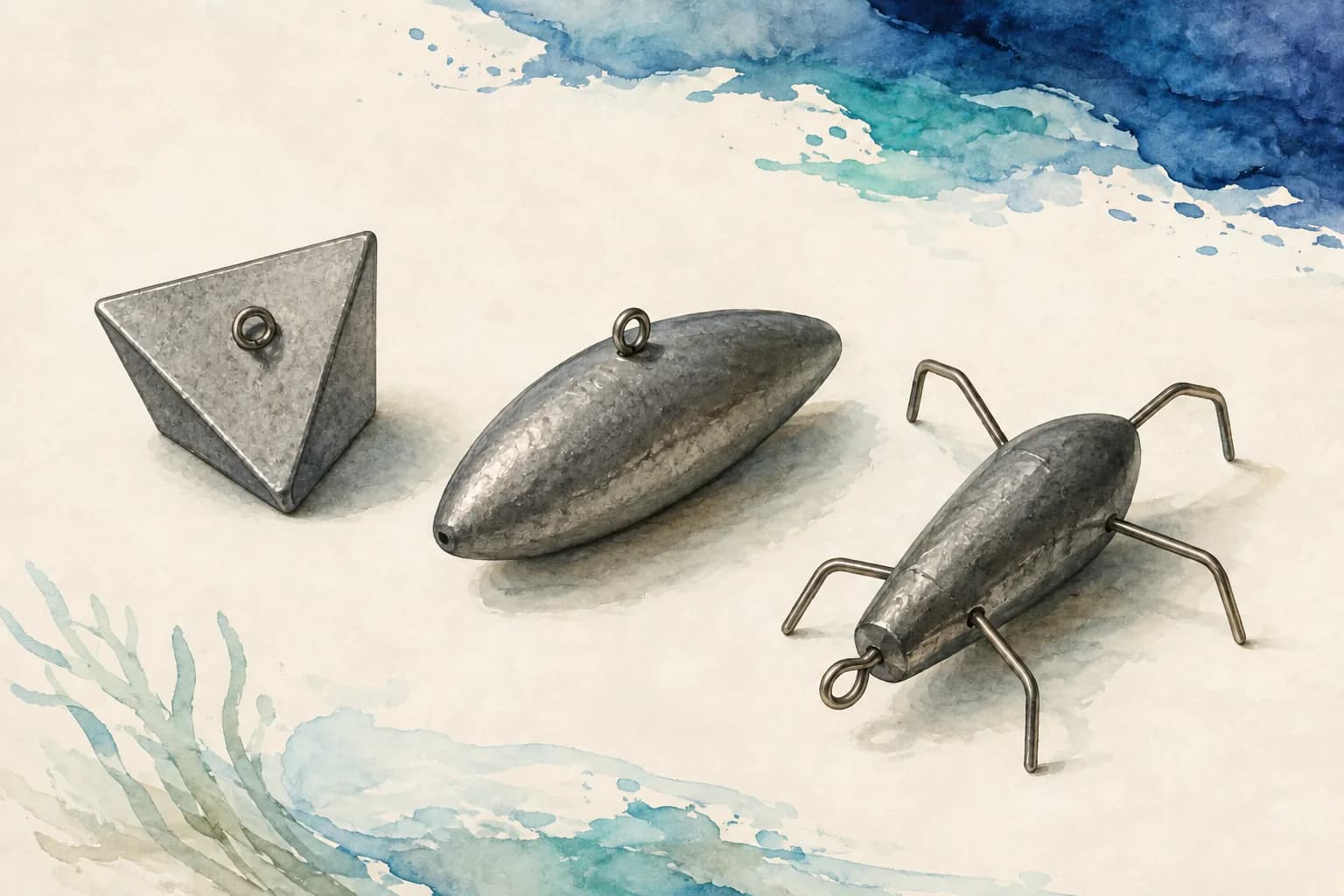
Weight and shape solve different parts of the problem. A rounded weight can move more readily over the bottom, while a pyramid is intended to grip sandy ground. Wire-grip designs offer another holding option, but they also change how you free and retrieve the rig. No shape holds equally well on every bottom.
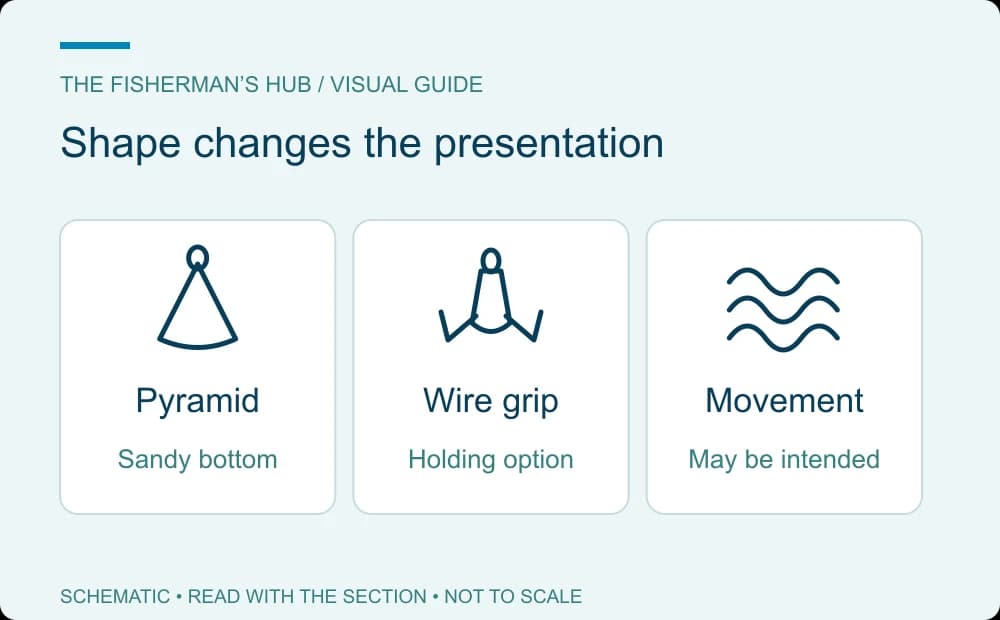
The Take Me Fishing guide uses a pyramid weight in its surf bait setup. Treat that as a starting design for sand, not proof that you need the same weight at every location. Around rock, weed, or snags, reassess the entire presentation instead of assuming more grip is automatically useful. For the attachment and component order, see how a sliding sinker fits into a fish finder rig.
| Shape | Reason to consider it | Tradeoff to check |
|---|---|---|
| Pyramid | A stationary presentation on suitable sandy ground | Can bury or snag; holding changes with bottom and current |
| Rounded bank | A smoother shape where movement or retrieval is part of the plan | May travel away from a fixed sandy target |
| Wire grip / Sputnik-style | Additional grip where the design suits the ground | Check how the particular wires release and whether the rig is practical to retrieve |
Test whether your bait stays on target
Cast to a reachable target, allow the sinker to settle, and gently take up slack. Watch whether the line angle keeps traveling along the beach. Pulling aggressively on the rod can move the sinker yourself, so do not confuse your own adjustment with current-driven drift. If you have not chosen a target yet, learn to identify troughs, bars and cuts from shore before testing whether the sinker holds there.
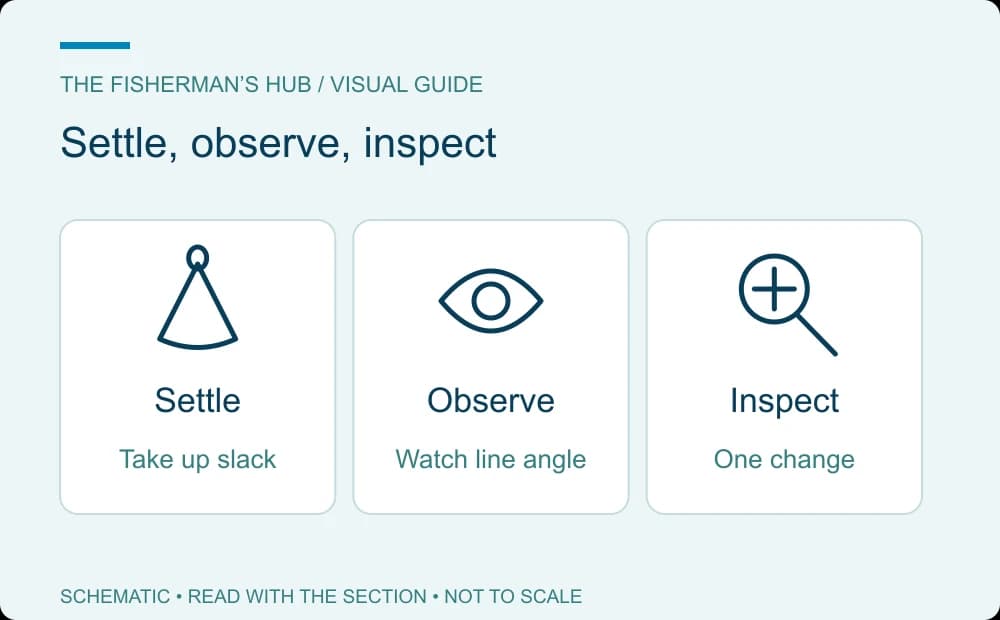
If the bait leaves your target, retrieve and inspect it. Weed caught on the line, a large bait, or a poor holding shape can make the problem worse. Check those factors before stepping up one available sinker size. Recalculate the total load every time.
Holding bottom is a presentation choice. A controlled moving bait can be intentional. This method is for the angler trying to keep a bait near a chosen feature, rather than letting it roll along the bottom.
Troubleshoot a rig that keeps drifting
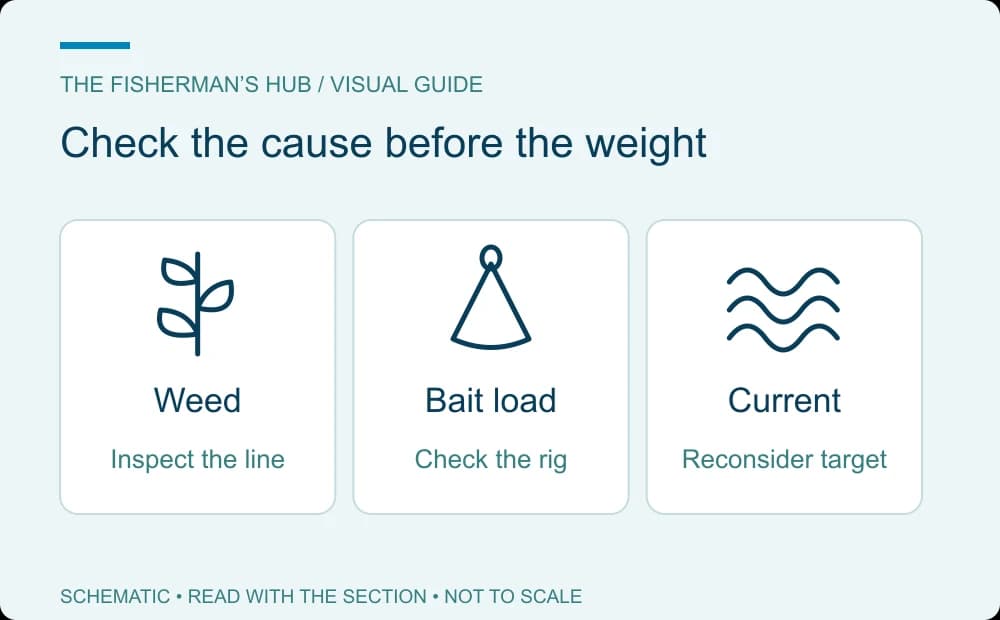
First distinguish slack line from a moving rig. After the sinker settles, gently recover slack and watch the direction of the line. If the line angle keeps traveling and the rig returns far from its target, make one change and repeat the comparison. Avoid repeatedly dragging the sinker with the rod while trying to judge whether it holds.
Weed on the main line
Retrieve and inspect the line above the rig as well as the hook. Adding a heavier sinker while leaving a growing clump of weed attached does not isolate the problem. Clear the line, choose a cleaner target if possible, and reassess the conditions.
Too much bait for the presentation
Compare the size of the bait with what you intended to cast. A larger bait changes both total load and how the rig behaves in moving water. If appropriate for your target fish, try a smaller or neater bait before increasing weight. Reweigh the finished rig when in doubt.
A target the outfit cannot hold
The useful answer may be a different position or tide stage. If your permitted casting load and suitable sinker shapes cannot maintain the presentation, stop the trial. Stronger line or a harder cast cannot turn an overloaded rod into the right outfit.
Know when to change the plan
If the heaviest complete rig your rod can handle still will not stay in the intended area, stop increasing the sinker. Move to more sheltered water, fish at a different tide stage, reduce the bait’s drag where practical, or use equipment rated for the task.
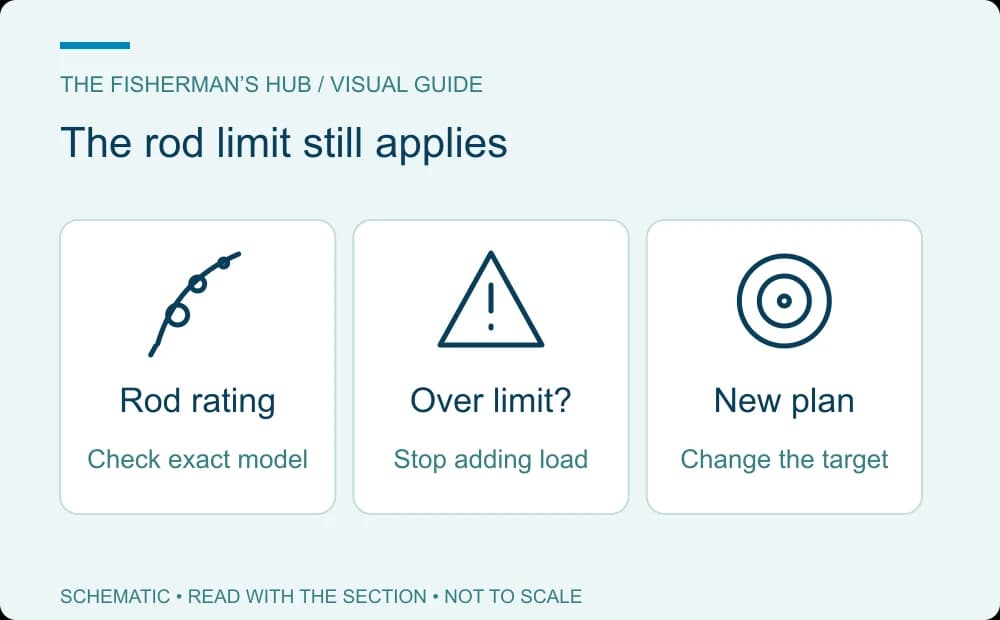
A stronger main line does not raise the rod’s casting limit. Neither does a shock leader. Check the condition and suitability of the line, leader, knots, and casting technique separately; every part of the system needs to suit the load. The main-line and leader guide explains those separate jobs before you change the rig.
Common surf sinker questions
These answers cover the decisions that often come up when applying the steps above.
How heavy should my sinker be for surf fishing?
Use a sinker that gives the intended presentation while keeping the complete baited rig within your exact rod’s casting range. If the rig will not hold, inspect bait drag, weed and sinker shape before adding weight.
What sinkers are best for surf fishing?
The answer depends on the bottom and whether you want the bait to stay put or move. Compare holding and retrieval together; a weight that anchors well but repeatedly snags is not a useful choice for that spot.
Is a 2 oz or 4 oz sinker enough?
Either may suit a particular outfit and beach. Neither is a universal starting weight: a 4 oz sinker already exceeds a rod with a 2 oz upper casting rating before bait is added.
Does bait weight count toward the casting limit?
Yes: the rod accelerates the sinker, wet bait and rig hardware together. Check more specific bait-casting guidance for your exact model, and weigh the prepared rig when the bait size makes the total uncertain.