
First: salt spray, sand, or a submerged reel?
Separate ordinary salt spray from a dunking or a fall into sand. Before turning the handle, look around the rotor, spool, bail, and handle for grit. A reel that was smooth before a fall but now grinds deserves inspection; repeated cranking is not a cleaning method.
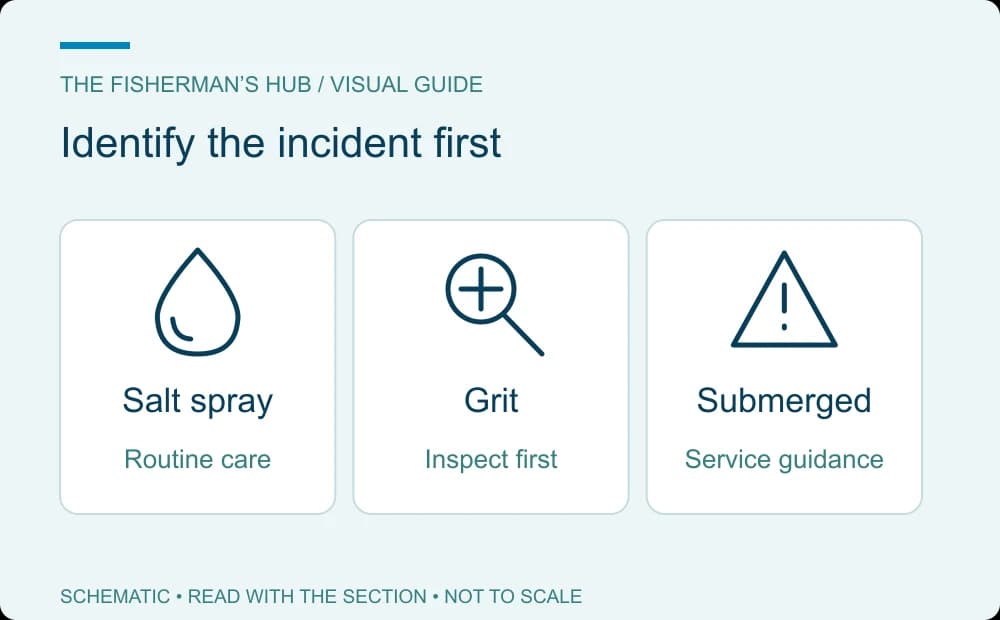
The cleaning decision starts with the incident, not the price of the reel. A premium reel that fell into the surf still deserves a different response from an inexpensive reel that stayed dry except for light spray. Keep a short incident note if someone else will inspect it.
If the reel went under water, go directly to the saltwater-dunking guidance and your manufacturer’s instructions. Ordinary exterior cleaning is not a substitute for that response.
| What happened | Immediate decision | What to tell a service shop |
|---|---|---|
| Ordinary salt spray; no new mechanical symptoms | Use the model’s routine exterior aftercare | Mention any recurring issue found during inspection |
| Reel touched sand and now feels gritty | Stop cranking and arrange an inspection | Where sand entered and whether the handle was turned afterward |
| Full saltwater immersion | Follow the manufacturer’s immediate instructions and arrange prompt service | Time of immersion and any freshwater cleaning already performed |
| Persistent noise, sticking, or erratic drag | Stop using the reel until the cause is checked | Which action produces the symptom and when it first appeared |
Prepare for routine exterior cleaning
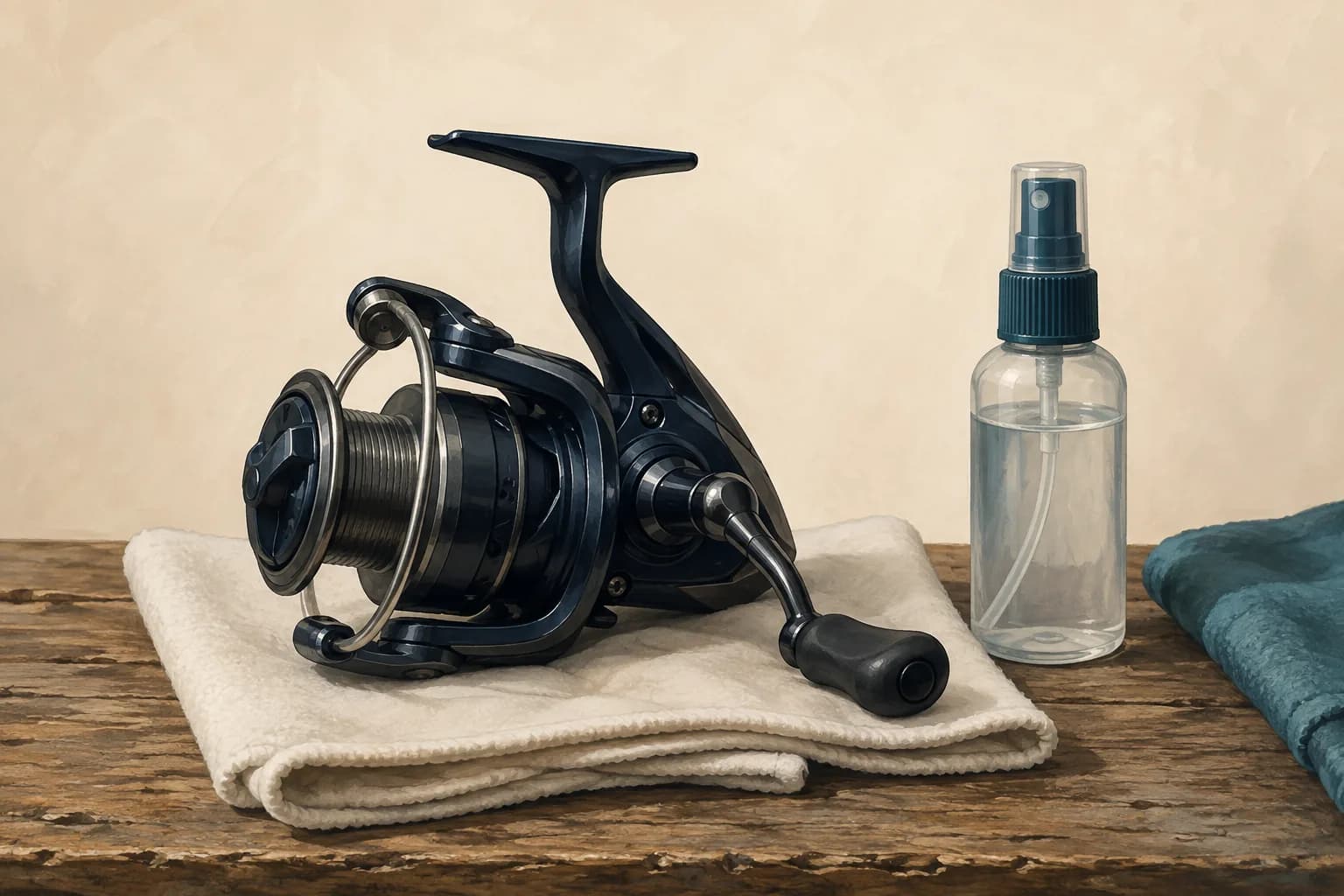
Remove or secure the hook and move to a clean work area. Have freshwater, a soft clean cloth, and the model’s instructions nearby. Keep the reel off the sand while packing up so the journey home does not add another problem.
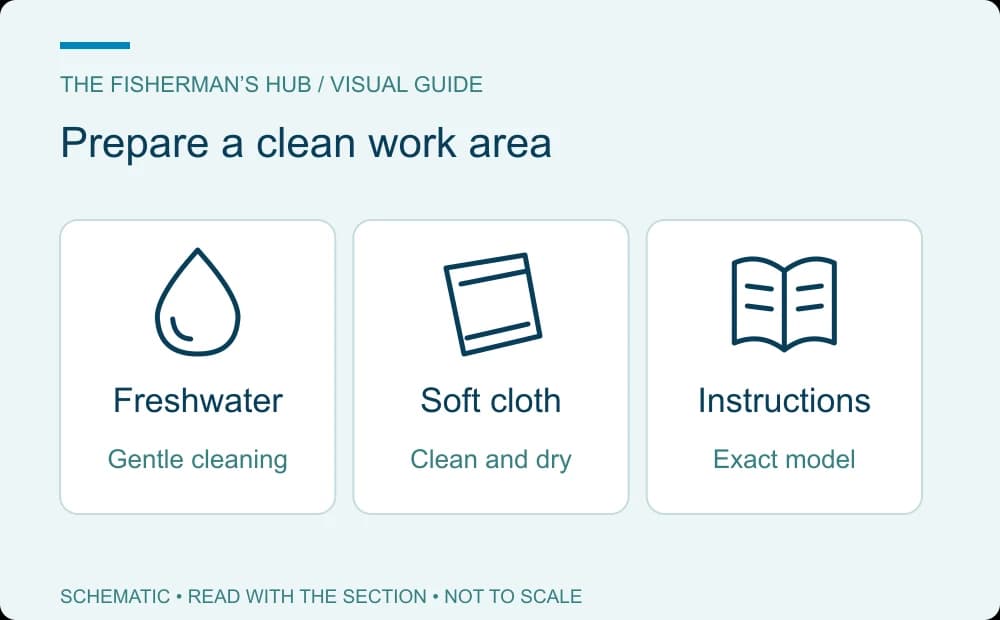
Find the correct manual by the model code, not just the brand. Sealed components and lubrication points differ. The following routine is exterior after-trip care; it is not a reel teardown tutorial.
- Freshwater and a soft, clean cloth
- The manual for the exact model
- A clean drying space away from sand and direct sun
Gently rinse, wipe, and air dry
Shimano’s maintenance FAQ calls for a light rinse followed by drying the exterior with a soft cloth, and specifically rejects high-pressure rinsing. Think gentle freshwater cleaning, not blasting salt away with a concentrated hose jet.
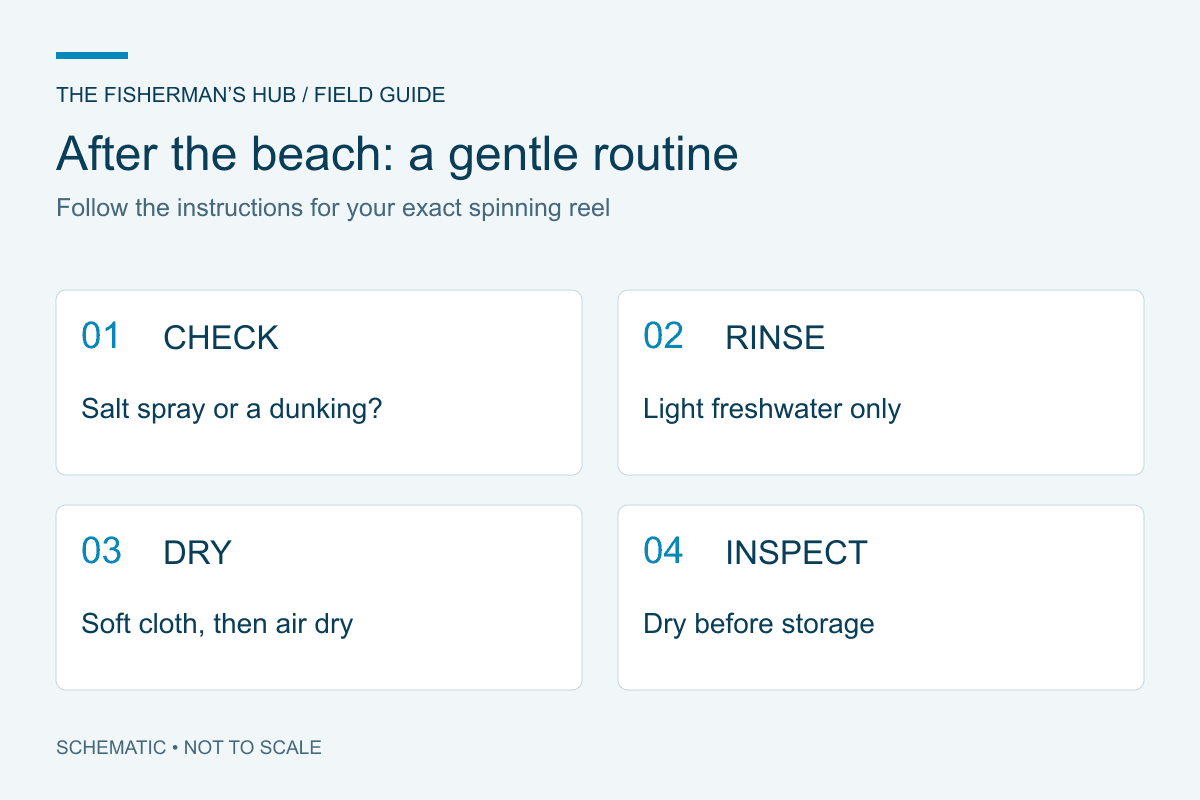
Daiwa’s general care guide specifies a fine mist and tightening the drag before washing, followed by loosening it afterward. Use your own model’s instructions for drag position. Leave the reel assembled for routine cleaning unless those instructions say otherwise.
- Source: Shimano FAQ — cleaning after saltwater or brackish water
- Source: Daiwa — general reel maintenance and washing
Dry before storing
Use a soft clean cloth on the exterior, then allow the reel to air dry out of direct sun. Daiwa also recommends backing the drag off after cleaning. Before your next trip, reset and check the working drag rather than assuming the storage position is ready to fish.
Do not put the reel straight into a closed padded bag while it is wet. Give it a clean drying place where it cannot be knocked onto the floor. Store it only once dry, and keep the bag itself free of damp sand.
Check the reel before the next trip
A reel can be clean and still be unprepared for fishing. Give yourself enough time at home to notice a problem before reaching the beach. Use the reel’s manual to judge normal operation; do not increase force if a part feels stuck. If the reel runs normally but the line keeps tangling, use the line-twist diagnostic sequence to distinguish loading, slack and tackle-rotation problems. After checking the reel, review the complete surf-fishing setup checklist for the rod, rig and other trip preparations.
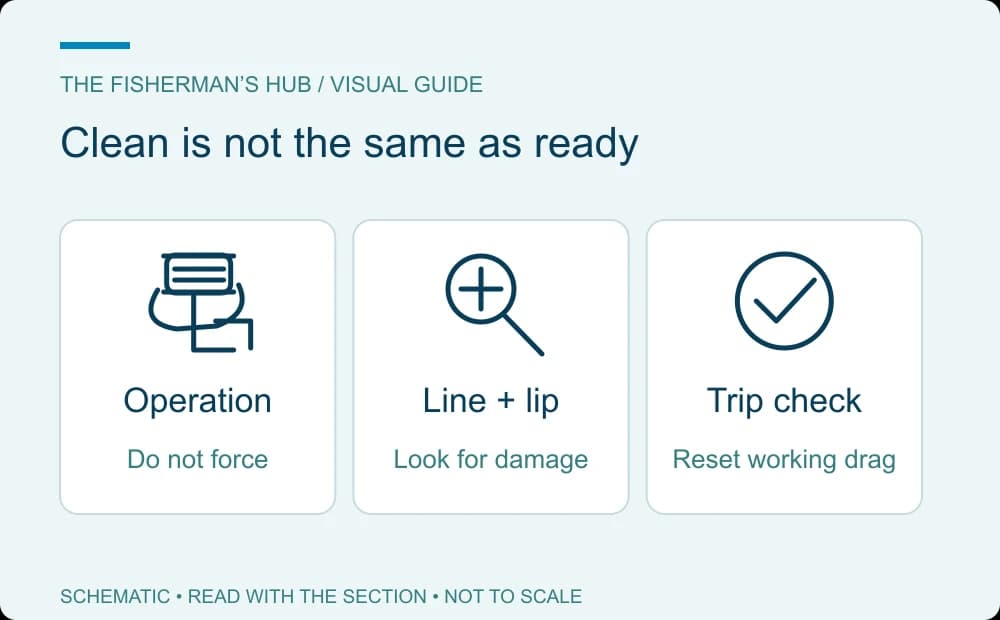
Use this pause to check the spool lip for visible damage and the accessible line for fraying. If the reel looks clean but the roller or handle behaves differently than before, make a note for inspection. A successful rinse is not evidence that an internal problem has disappeared. If damaged line has to be removed, recalculate the usable main line remaining before the next trip.
- Confirm the reel and carrying bag are dry and free of loose sand.
- Inspect visible line for damage and the spool for obvious protruding loops.
- With no hook exposed, check the handle and bail gently for a change from normal operation.
- Set and test the working drag according to the outfit and manufacturer guidance; the storage setting is not your fishing setting.
- If new roughness, sticking, or unusual drag behavior remains, arrange service before the trip.
Keep maintenance notes that a technician can use
Write the exact model code, date, saltwater exposure, any dunking or sand contact, and the symptom. “Grinding began after the reel fell in wet sand; handle turned twice” is much more useful than “needs oil.” Record products already applied so the technician knows what is inside or on the reel.
There is no single servicing interval suitable for every reel and amount of use. Let the model guidance, exposure, and symptoms determine when an internal service is due. Regular rinsing does not replace that assessment.
Lubrication is a separate, model-specific task
An exterior wash does not mean every bearing needs oil after every trip. Use the lubricant, quantity, and locations specified for your model. Avoid opening sealed assemblies just because a general video shows a different reel being dismantled.
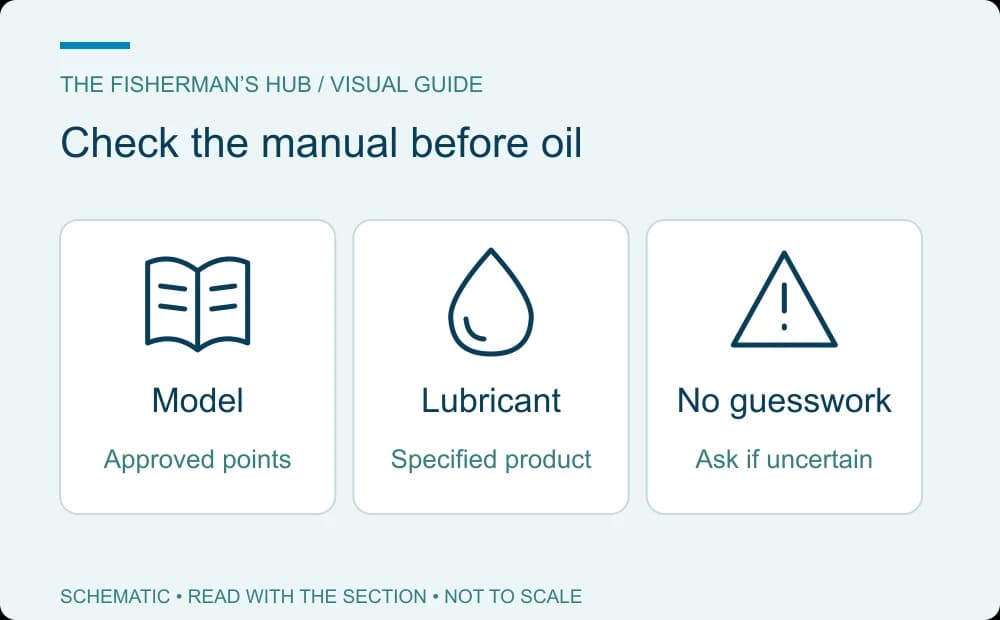
Daiwa warns against spraying penetrating lubricants directly into its reels and against oil down a spinning reel’s main shaft. Do not treat household spray as an all-purpose fix for stiffness. If you cannot identify the approved lubrication point, ask the manufacturer or service shop before applying anything.
Keep a separate note of scheduled maintenance. Recording ‘rinsed after beach trip’ and ‘serviced by shop’ as different events prevents you from mistaking regular exterior care for an internal inspection.
What to do after a saltwater dunking
A submerged reel needs a different decision. Daiwa advises prompt professional servicing after immersion, particularly in saltwater. Follow the manufacturer’s immediate after-dunking instructions and tell the service technician that the reel was submerged, even if the handle still turns.
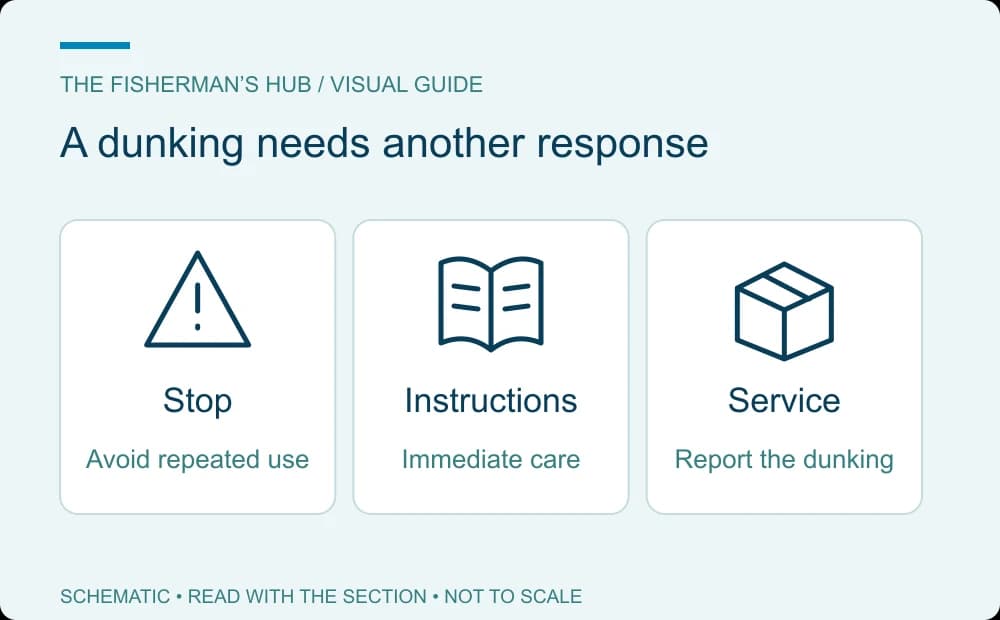
Do not assume a water-resistant or sealed reel is safe to soak. The relevant limit belongs to the exact model. Also tell the technician whether the reel contacted sand, when the incident happened, and what cleaning you have already done. Those details are more useful than simply reporting that it feels rough. If you are choosing equipment for a different level of exposure, our surf reel comparison identifies model-specific protection claims and limitations; it does not make an existing reel safe to immerse.
If a reel develops persistent grinding, a sticking roller, erratic drag, or a bail that will not operate normally, stop using it until the cause is checked. A replacement reel is not automatically necessary, but continuing to fish is not a diagnostic test.
Common saltwater reel-cleaning questions
These answers cover the decisions that often come up when applying the steps above.

Should I rinse a reel even if it was not visibly splashed?
A saltwater trip can leave exposure that is not obvious from a large splash. Follow the after-trip routine for your model; Daiwa’s general guidance recommends washing gear after outings.
Can I soak my spinning reel in a bucket?
Do not use soaking as a general cleaning method. Immersion is different from a light exterior rinse and can require professional attention; water-resistant labeling is not permission to submerge the reel.
Should the drag be tight or loose while cleaning?
Use your exact model’s instructions. Daiwa’s general routine calls for tightening before washing and loosening afterward, so washing and dry storage are separate settings. Reset the working drag before fishing again.
Do I need to oil the reel after every saltwater trip?
Not as a universal routine. Lubrication points, product and quantity depend on the reel; exterior washing alone does not mean every bearing should receive oil. Consult the model instructions before applying lubricant.