
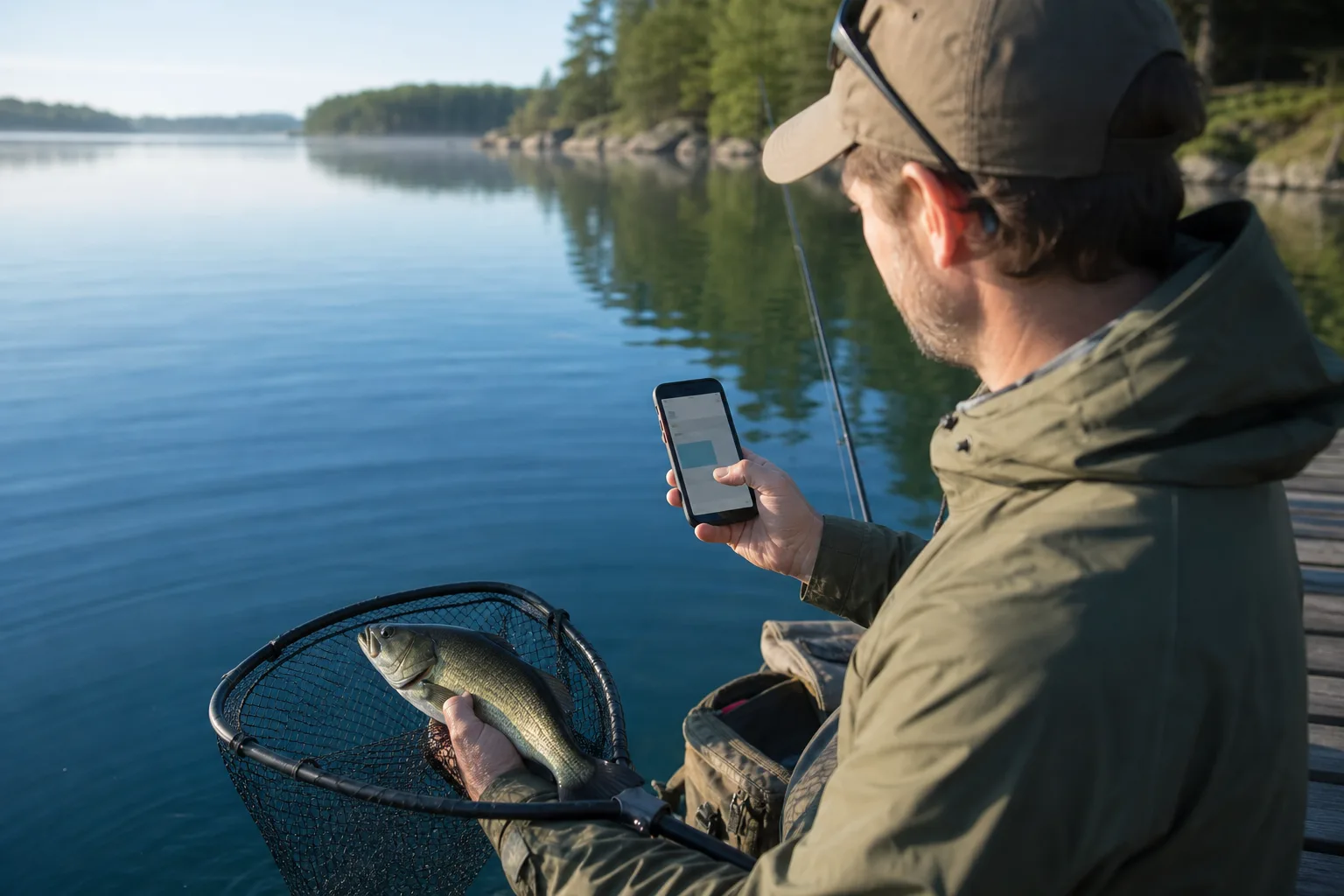
A catch log turns one fishing day into something you can learn from later. You do not need a complicated spreadsheet. A photo, the species, a few notes, and an optional spot are enough to start seeing what worked.
Why keep a record of your catches?
It is easy to remember the big fish and forget the useful details. A few weeks later, the tide, lure color, wind, and water may all blur together. A short note keeps those clues with the catch.
Your log does not need to prove anything to anyone. It is a private notebook that can help you prepare for a return trip, compare seasons, and remember good days on the water.
What should you save?
Start with facts you can enter quickly. You can always add more detail when it is useful. A simple entry is better than a perfect log you never finish.
- The fish species and the date of the catch
- One clear photo, if you took one safely
- The bait, lure, rig, or method that worked
- Weather, water, tide, or current notes you may want later
- A spot name and GPS coordinates only when you choose to save them
Your account keeps your catch log together
The Fisherman’s Hub catch log is tied to your signed-in account. The catches you create are returned only to that account. Your exact GPS coordinates are optional, and they are not shown on the public website.
Use a strong, unique password and keep it in a password manager. Think carefully before saving a sensitive fishing spot, even in a private tool. A general spot name can be enough when exact coordinates are not needed.
How to start your first catch log
Open My catches and create an account with your email address. After signing in, choose Add a catch. Enter the species and date, then add a photo, notes, a spot name, or coordinates if they help you.
Keep the first entry short. On your next trip, use the same kind of notes. A steady habit makes the log more useful than adding many fields once and never returning.
Document the catch without putting the fish at risk
Have the camera ready before lifting the fish, or take the photo while holding it right over or in the water. NOAA’s National Marine Sanctuaries advises keeping handling time and air exposure under 20 seconds. NOAA Fisheries says less than 60 seconds of air exposure is ideal if a fish must leave the water.
Wet your hands first to protect the fish’s slime coat, and avoid cotton towels and cotton gloves. Hold the fish horizontally and support its weight under the belly and along its body; never hold it by the eyes or gills or let it hang by its lip or mouth. Use a knotless or rubber-coated net to remove less slime and fewer scales.
When surf fishing, do not drag the fish through the sand. To release it, hold its head into the current until it swims strongly out of your hand.
NOAA Fisheries’ inland fishing guide advises skipping the photo when a quick release should come first. Examples include an endangered or threatened species, a deeply set hook, a long and tiring fight, especially warm water, or a fish showing signs of stress.
Always follow local fishing rules. Size limits, closed seasons, protected species, and handling advice can change by place and time, so check the official local source before fishing.
Review the log before your next trip
Before going back, read your old notes. Look for one useful pattern: a tide stage, water depth, time of day, or bait choice. Treat it as a clue rather than a promise. Fish and conditions can change.
The goal is not to turn fishing into homework. It is to save the small lessons that make the next day on the water easier to plan.